


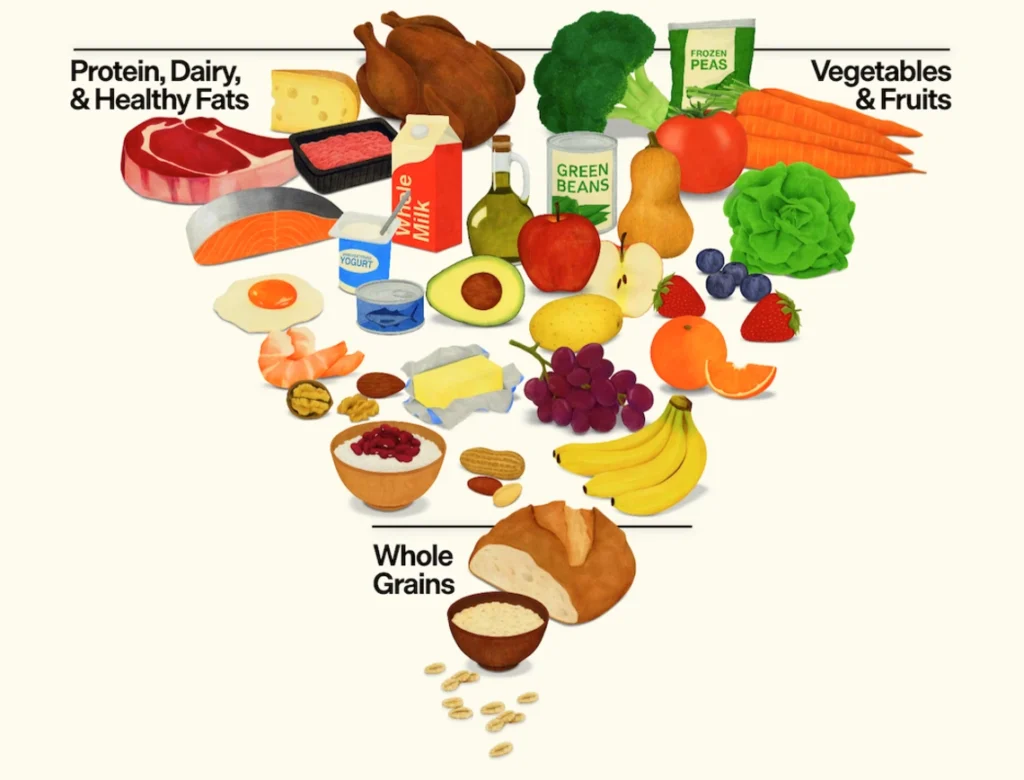
In January 2026, federal health agencies released the Dietary Guidelines for Americans, 2025–2030, reintroducing the food pyramid as an inverted visual that emphasizes real, minimally processed foods. The widest tier now highlights protein-rich foods, full‑fat dairy without added sugars, and healthy fats from whole sources, alongside vegetables and fruits. Whole grains appear in a narrower base, and the guidance urges limiting refined carbohydrates, added sugars, ultra‑processed products, and artificial additives.
For patients living with chronic conditions, the updated pyramid offers a practical framework. Prioritizing protein at meals can improve satiety and help stabilize blood glucose, which supports diabetes management and weight control. The inclusion of healthy fats from foods such as nuts, seeds, seafood, eggs, olives, and avocados aligns with cardiovascular goals when paired with reduced intake of highly processed items. Vegetables and fruits remain daily essentials for micronutrients and fiber. Although positioned with less visual prominence, whole grains retain value for gut health and cardiometabolic outcomes when chosen in intact or minimally processed forms.
The guidelines’ strong warning against ultra‑processed foods reflects growing concern about metabolic risk. Reducing products with refined grains, added sugars, and long ingredient lists can support better lipid profiles, blood pressure, and glucose control over time. Patients should note that the visual shift does not eliminate the role of quality carbohydrates; rather, it encourages a balanced pattern centered on whole foods while discouraging refined options.
Implementation works best when tailored to individual needs, medical histories, and cultural foodways. A workable day of eating might anchor each meal with a protein source, surround it with colorful produce, include healthy fats for flavor and fullness, and use whole grains or legumes in amounts appropriate to activity level and glycemic targets. This approach is consistent with the federal message to “eat real food” and to personalize portion sizes by age, sex, body size, and activity.
Ask your Aria provider how you can apply the new food pyramid to your specific health goals, medications, lab values, and family food traditions. A brief conversation can translate national guidance into a clear, sustainable plan that fits your life and supports long‑term management of diabetes, hypertension, cholesterol, and weight.